
In New Zealand, no child should have to learn on an empty stomach. That is the core philosophy behind Ka Ora, Ka Ako, the national Healthy School Lunches programme. Originally launched as a pilot in 2020, the programme now delivers free, nutritious lunches to over 230,000 students in primary, intermediate, and secondary schools across Aotearoa daily.
For many families, this initiative has been a game-changer, reducing weekly grocery bills and ensuring children receive at least one balanced meal every school day. However, with recent government redesigns introduced for 2025 and 2026, many parents are wondering how the programme operates today, what is on the menu, and who qualifies. This guide covers everything you need to know about Ka Ora, Ka Ako in 2026.
🌱 Parent Tip
If your child is attending a Ka Ora, Ka Ako school and has severe food allergies or specific cultural dietary requirements (such as Halal or vegan), contact your school office directly. Schools work closely with lunch suppliers to accommodate medically diagnosed allergies and religious beliefs.
What is Ka Ora, Ka Ako?
The name Ka Ora, Ka Ako comes from a Māori proverb meaning “health is prerequisite to learning” (literally, “to be well, to learn”). Run by the Ministry of Education (MOE), the programme aims to reduce food insecurity and poverty, improve student concentration, and support overall health and wellbeing.
Rather than providing emergency food parcels, Ka Ora, Ka Ako is a universal programme within eligible schools. This means every single student in a participating school is offered a free lunch, regardless of their family’s financial status. This universal approach helps eliminate the social stigma often associated with receiving free food.
Who is Eligible for Free School Lunches?
The programme does not target individual students; instead, it targets schools that face the greatest socioeconomic barriers. Eligibility is determined using the Equity Index (EQI), which replaced the old decile system in 2023. Schools with an Equity Index score in the top 25% (indicating higher barriers to education) are invited to join the programme.
Currently, the programme is active in over 1,000 schools across New Zealand, focusing heavily on regions with high socio-economic needs such as Northland, the East Coast, parts of Auckland, and parts of the South Island. If you want to see how school funding works under the current system, read our guide on the Equity Index and school funding in 2026.
📌 Did You Know?
According to Ministry of Education evaluations, schools participating in Ka Ora, Ka Ako report a significant reduction in student fatigue, improved classroom behavior, and a boost in overall attendance, particularly for students who previously missed classes due to food insecurity.
The 2025/2026 Programme Redesign: What Changed?
To ensure the long-term sustainability of the programme, the Associate Minister of Education announced a major redesign of Ka Ora, Ka Ako that took effect from the start of the 2025 school year and continues throughout 2026. The main objective was to reduce costs without compromising nutritional quality.
Here is a breakdown of the key structural changes in the redesigned programme:
| Feature | Original Model (Pre-2025) | Redesigned Model (2025 & 2026) |
|---|---|---|
| Primary & Intermediate Schools | Local suppliers delivering individual pre-packaged meals. | Remained under the successful local delivery model to support regional businesses. |
| Secondary Schools (Year 9–13) | High-cost individual hot or pre-prepared meals. | Centralised bulk ordering model delivering staple ingredients (bread, fruit, spreads) for on-site prep. |
| Cost per Lunch (Secondary) | Approximately $6.00 to $8.00 per student. | Reduced to around $3.00 per student through bulk purchasing. |
| Annual Taxpayer Savings | N/A | Saves approximately $107 million per year, which is reinvested in school resources. |
Under the new secondary school model, schools receive bulk ingredients and set up their own lunch preparation areas. This “make-your-own” sandwich bar approach has not only saved money but has also significantly reduced food waste, as students only take what they actually intend to eat.
What is on the Menu? (Example Lunch Items)
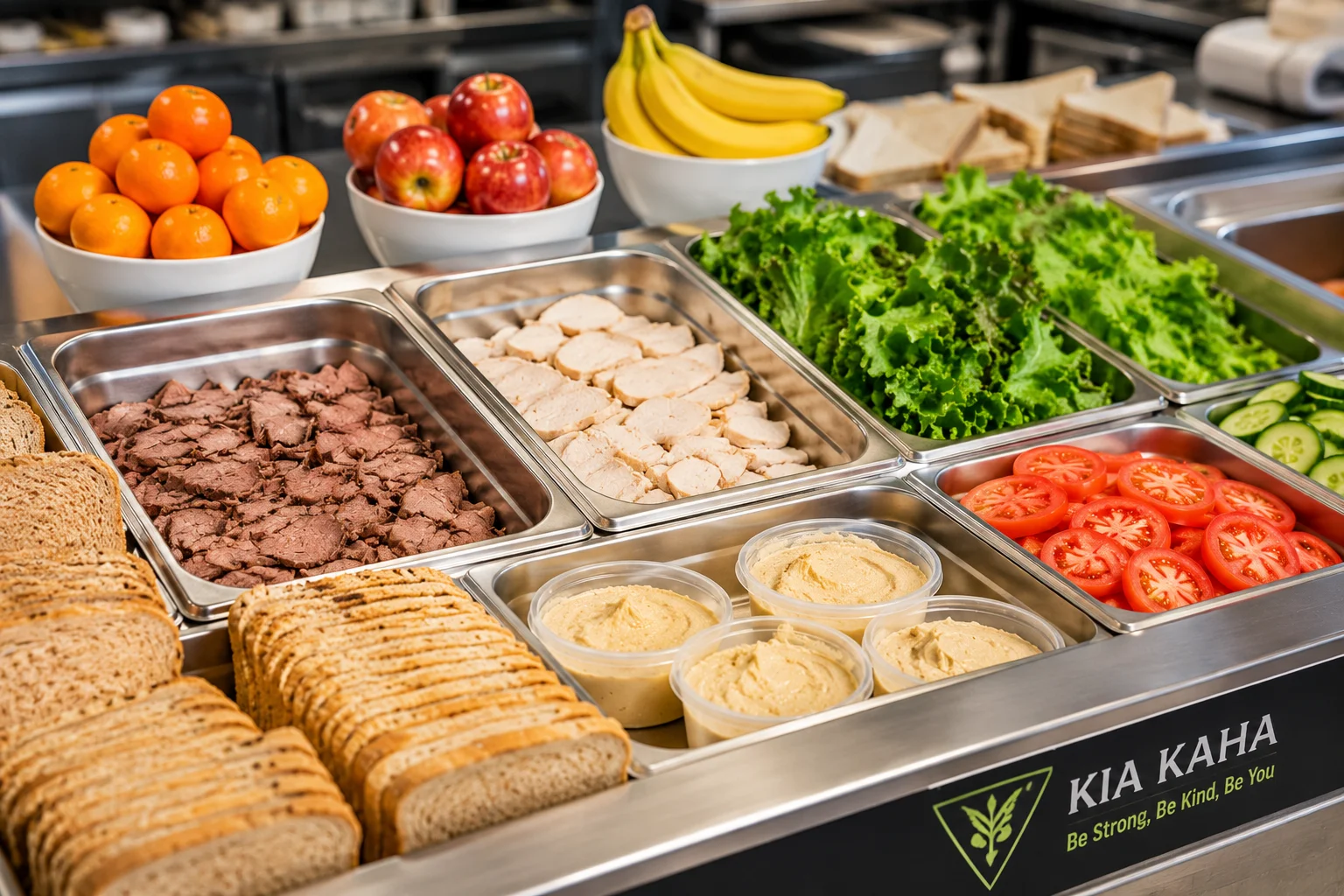
The Ministry of Education sets strict nutritional guidelines that all food suppliers must follow. Lunches must be low in saturated fat, sugar, and sodium, and must include a balance of protein, carbohydrates, and vegetables.
Depending on the school level and local supplier, a typical weekly menu might include:
- Wraps and Sandwiches: Wholemeal wraps with chicken, salad, and light mayonnaise; roast beef and cheese sandwiches.
- Hot Meals (Primary/Intermediate): Mild chicken curry with rice; vegetable pasta bake; beef mince sliders with hidden grated vegetables.
- Snacks: Fresh fruit (apples, bananas, mandarins), carrot and celery sticks with hummus, or plain yoghurt pots.
Lunches are strictly nut-free to protect students with severe allergies, and carbonated drinks or sweets are completely banned from the menus.
⚠️ Important Note
Ka Ora, Ka Ako is completely voluntary for schools and students. If you prefer to pack your own lunch for your child, you are free to do so. For nutritious ideas on home-prepared school meals, check our article on healthy lunchbox ideas for NZ schools.
How Parents Benefit
The benefits of the free school lunch programme extend far beyond the classroom wall:
- Financial Relief: The average cost of packing a healthy lunch in New Zealand is estimated at $4 to $6 per day. For a family with three school-aged children, Ka Ora, Ka Ako saves approximately $60 to $90 per week in grocery expenses.
- Time Savings: Busy working parents save valuable time in the mornings, knowing their children will receive a fresh, healthy meal at school.
- Peace of Mind: Parents can be confident that their children are eating food that meets national nutritional guidelines, helping them establish healthy eating habits for life.
How to Check if Your School Participates
If you are enrolling your child in a new school, you can easily find out if they participate in the programme. Most eligible schools list their involvement in their enrolment prospectus. Alternatively, you can search for local schools and view their details on our New Zealand Schools Finder, or contact the school administration office directly.
For families who are relocating, understanding the enrolment scheme is crucial. You can read more about it in our comprehensive guide to school zones in New Zealand.