
Starting tertiary education is an exciting milestone, but navigating the costs can be daunting. For years, New Zealand students relied on the first-year “Fees Free” scheme to help ease the financial transition into university, polytechnic, or wānanga study. However, the landscape has changed significantly.
The Coalition Government introduced a major shift in the policy that took effect from 1 January 2025 and continues throughout 2026. The policy has transitioned from a “first-year free” model to a “final-year fees-free” scheme. This change has left many students and parents asking: how does the system work now? Who qualifies, and how do you claim your fees back? This guide breaks down the new Fees Free policy in 2026.
📌 Did You Know?
The transition to the final-year model was designed to encourage students to complete their qualifications. Under the old system, the government funded the first year of study regardless of whether the student completed their degree. In 2026, funding is tied directly to qualification completion.
How the New ’Final-Year Fees-Free’ Model Works
Under the 2026 rules, the government will fund your final year of eligible tertiary study or work-based training, rather than your first. Practically, this means you will need to pay for your initial years of study yourself—often using a student loan via StudyLink—and then have your final-year fees covered or refunded once you successfully complete your qualification.
- Maximum Coverage: The government covers up to $12,000 (including GST) for tuition fees and mandatory course costs in your final year of study.
- Equivalent Study: For full-time students, this generally covers one EFTS (Equivalent Full-Time Student) unit, which translates to a standard academic year. For part-time students, the coverage is calculated proportionally based on credits.
- Incentive for Completion: You must complete your qualification to receive the fees-free credit. If you drop out before completing your degree, diploma, or certificate, you will not receive the funding.
🌱 Student Tip
Because you must pay for your first years of study upfront, it is highly recommended to apply for a student loan through StudyLink early in the year. If you qualify for the final-year write-off, your student loan balance for your final year will be adjusted or refunded once you graduate. You can read our NCEA Rank Score Calculator to see how NCEA performance influences university entry requirements.
Who is Eligible in 2026?
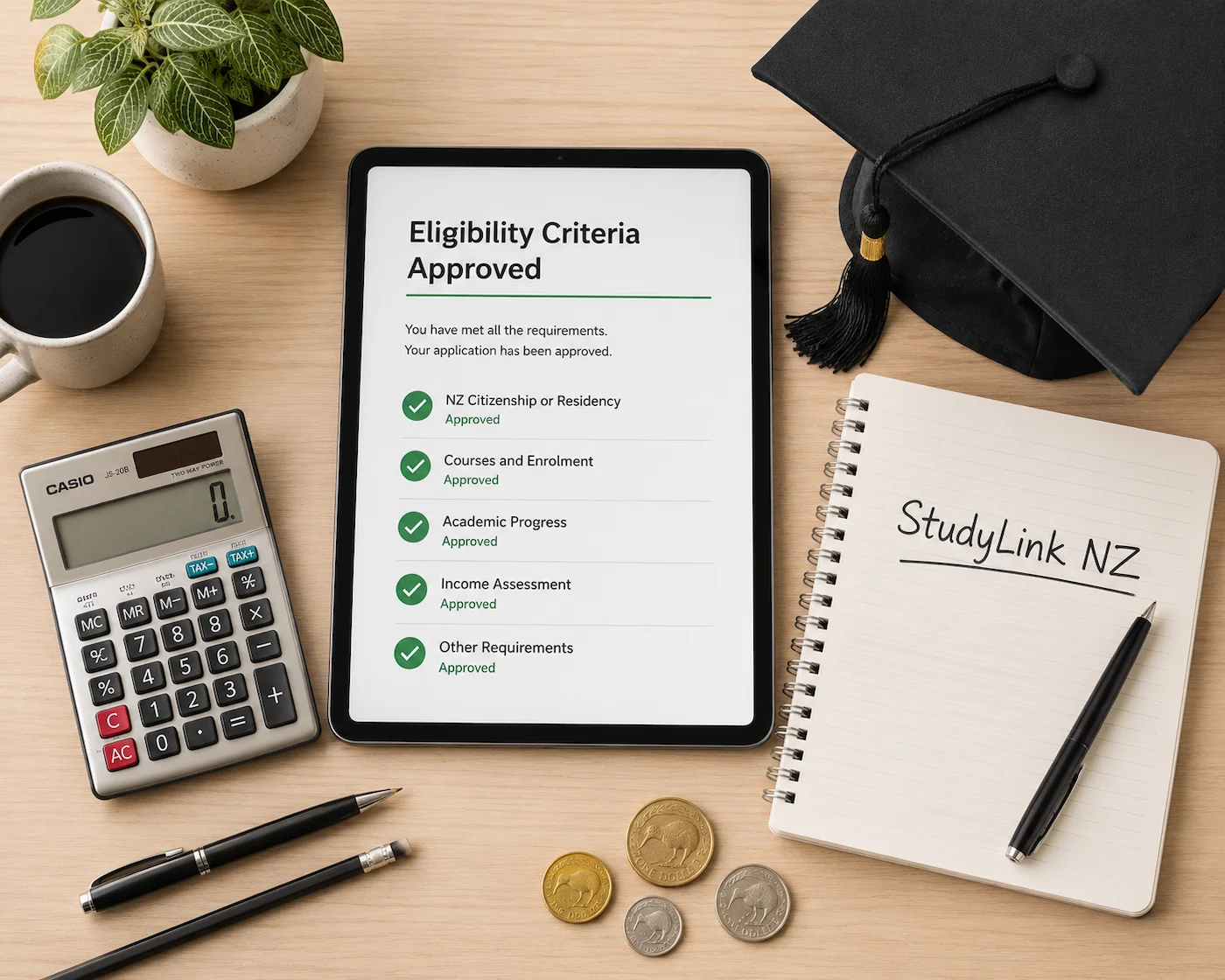
To qualify for the final-year Fees Free scheme in 2026, you must meet specific citizenship, residency, and study history requirements:
1. Citizenship and Residency
You must be one of the following:
- A New Zealand citizen.
- A holder of a residence class visa who has resided in New Zealand for at least three years.
- An Australian citizen or permanent resident who has lived in New Zealand for at least three years.
2. Prior Study Rules
The policy is designed for first-time tertiary students. To qualify, you must have completed less than half a year of prior tertiary study (under 0.5 EFTS or 60 credits) at Level 3 or above on the New Zealand Qualifications and Credentials Framework (NZQCF) since leaving school.
3. Qualification Level
The study must be towards an eligible qualification at Level 3 or above on the NZQCF. This includes most bachelor’s degrees, certificates, and diplomas offered by universities, Te Pūkenga (polytechnics), and private training establishments (PTEs).
| Study Type | Eligibility Criteria | Maximum Entitlement |
|---|---|---|
| Bachelor’s Degree (3+ Years) | First-time student, NZ citizen/resident. Eligible final year covered. | Up to $12,000 for the final year. |
| Diploma / Certificate (1 Year) | First-time student, NZ citizen/resident. Completed qualification covered. | Up to $12,000 for the single year. |
| Industry Training (Apprenticeships) | First-time student, NZ citizen/resident. Final year of training covered. | Proportional coverage based on training credits. |
How the Payment is Claimed
The process for receiving the final-year Fees Free entitlement is managed by the Tertiary Education Commission (TEC). Since the entitlement is based on completion, the workflow is as follows:
- Enrol and Pay: You enrol in your qualification and pay your fees for each year of study. Most students do this by taking out a student loan with StudyLink.
- Study and Complete: You complete all required papers and successfully graduate or receive your qualification certificate.
- Verification and Write-Off: Once your tertiary education provider confirms your completion with the TEC, the TEC calculates your final-year entitlement. If you paid via a StudyLink student loan, the TEC will pay StudyLink directly to write off up to $12,000 of your final-year loan balance. If you paid cash, you will receive a refund.
⚠️ Important Note
You must claim your final-year entitlement within a set timeframe after completing your qualification. Keep your contact details updated with both your tertiary provider and StudyLink to ensure you don’t miss notifications regarding your refund or loan write-off.
What About Transitioning Students?
The transition from the old first-year free model to the new final-year free model has specific grandfathering rules to ensure fairness:
- If you started study before 2025: If you were already enrolled and had used a portion of your first-year Fees Free entitlement under the old rules, you generally remain under the old first-year free system until your allocation is fully used, subject to time limits.
- If you started study after 1 January 2025: You are fully under the new final-year Fees Free scheme. You must complete your qualification to receive any fees-free funding.
How to Check Your Fees Free Status
The easiest way to confirm your eligibility and check your status is through the official government portal:
- Go to the official website: feesfree.govt.nz.
- Enter your National Student Number (NSN). You can find your NSN on your NCEA results notice or by contacting NZQA.
- The tool will display your current eligibility status (e.g., “Eligible”, “Not Eligible”, or “Indeterminate” if more information is required).
If your status is Indeterminate, you may need to complete a statutory declaration confirming that you meet the prior study and residency rules.
Understanding the Fees Free guidelines helps New Zealand families plan their tertiary education finances with confidence. For more information on transitioning to university, explore our guide on NCEA vs. IB vs. Cambridge curricula or search for tertiary providers in your region on our Tertiary Providers Search.